Ever slid your coffee table across your newly installed laminate floor… only to hear that soul-crushing scritch-scratch and see white gouges marring your “forever” flooring? Yeah. I’ve been there—twice. And both times, it happened within a week of swearing I’d “be more careful.”
If you love laminate floors (and who doesn’t? They’re affordable, stylish, and mimic hardwood beautifully), you already know they’re not indestructible. The real enemy isn’t spills—it’s furniture legs grinding into that delicate wear layer like sandpaper on silk. That’s where furniture coasters for laminate floors come in: small, unassuming heroes that prevent irreversible damage.
In this post, you’ll learn exactly why standard felt pads fail on laminate, how to choose coasters that actually work, which materials to avoid (looking at you, rubber!), and real-world examples of what happens when you skip this $20 fix. Plus: a brutally honest rant about “universal” protectors—and a 2000s throwback you didn’t know you needed.
Table of Contents
- Why Laminate Floors Need Special Coasters
- How to Choose the Right Furniture Coasters for Laminate Floors
- Best Practices for Installing and Maintaining Coasters
- Real-World Case Study: When Coasters Save the Day
- Frequently Asked Questions
Key Takeaways
- Standard felt pads often fail on smooth laminate because they trap grit and slide unpredictably.
- The best furniture coasters for laminate floors are non-abrasive, slightly grippy (not sticky), and wide enough to distribute weight evenly.
- Natural cork or high-density EVA foam outperform rubber and plastic on laminate due to their shock absorption and non-marking properties.
- Always clean floor and coaster contact points before installation—dust is a silent floor killer.
- Reapply or replace coasters every 6–12 months depending on furniture movement frequency.
Why Laminate Floors Need Special Coasters
Laminate flooring isn’t wood—it’s a high-pressure composite with a photographic layer and a transparent aluminum oxide wear coat on top. According to the North American Laminate Flooring Association (NALFA), this wear layer typically measures between 6–12 mils thick. Once scratched through, it can’t be sanded or refinished like real hardwood.
I learned this the hard way when I moved a mid-century modern credenza across my kitchen after hosting brunch. The cast iron base had “self-adhesive felt pads”—you know, the kind that come pre-stuck to furniture from big-box stores. What I didn’t realize? Those pads collect dust like a magnet, turning each foot into a tiny loofah dragging micro-scratches with every inch of movement.
Worse yet: many rubber-based coasters contain plasticizers that can leach onto laminate over time, leaving yellowish stains that won’t wipe off (confirmed by Shaw Floors’ technical bulletin #LB-2021-08).
How to Choose the Right Furniture Coasters for Laminate Floors
What material actually works?
Optimist You: “Just stick on some felt pads!”
Grumpy You: “Ugh, fine—but only if coffee’s involved… and even then, no. Felt + laminate = disaster waiting to happen.”
Here’s what works—and why:
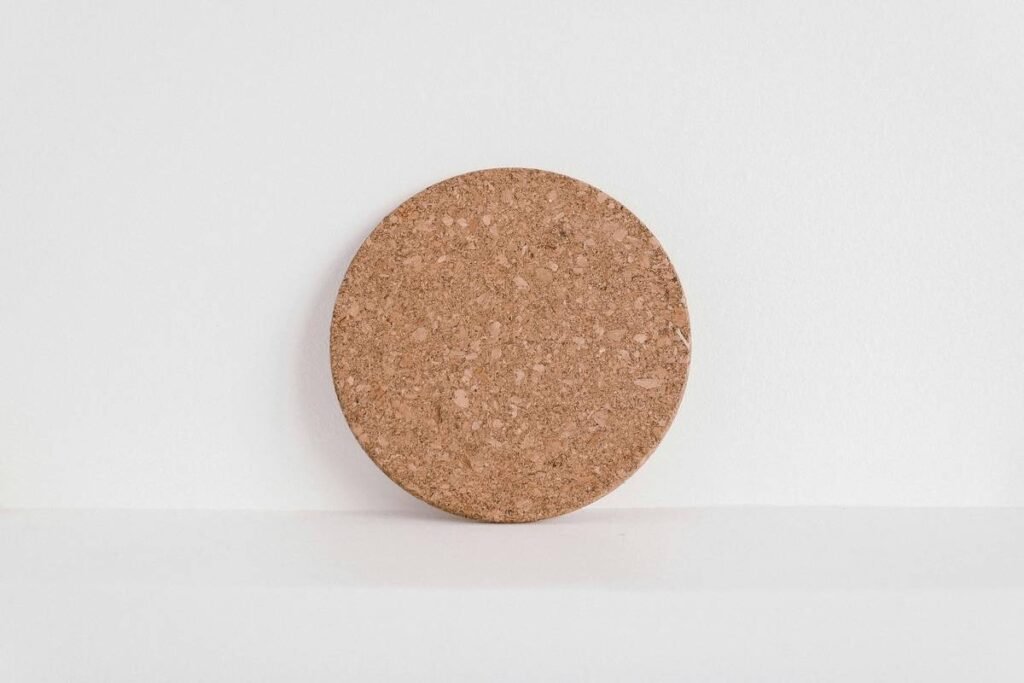
- Cork: Naturally compressible, non-abrasive, and provides slight friction without sticking. Ideal for heavy items like sofas or bookshelves. Brands like Felt & Co. offer adhesive-backed cork discs rated for laminate compatibility.
- EVA Foam (Ethylene-Vinyl Acetate): Soft, closed-cell foam used in yoga mats and sneaker soles. It’s water-resistant, won’t stain, and cushions weight beautifully. Look for “non-marking” labels—these meet ASTM D4236 safety standards.
- Hard Plastic (with caution): Only use smooth-gliding polypropylene or nylon caps designed specifically for hard surfaces. Avoid anything textured—they’ll act like sandpaper under pressure.
Size matters more than you think
A common mistake? Using coasters too small for the furniture leg. Rule of thumb: the coaster diameter should be at least 1.5x the width of the leg base. A narrow metal chair leg needs a wider footprint to distribute downward force and prevent point-load denting.
Adhesive vs. slip-on: Which lasts?
Self-adhesive coasters work great—if your furniture legs are clean, dry, and oil-free. But if you plan to move pieces often (hello, seasonal rearrangers!), consider reusable slip-on coasters made of silicone or TPE. They’re removable, washable, and won’t leave residue.
Best Practices for Installing and Maintaining Coasters
- Clean first: Wipe floor area and furniture feet with isopropyl alcohol. Any dust, wax, or oil compromises adhesion.
- Press firmly: Apply 10–15 seconds of steady pressure per coaster to activate the adhesive bond.
- Let cure: Wait 24 hours before sliding furniture—even if it “feels” stuck.
- Inspect quarterly: Check for wear, debris buildup, or lifting edges. Grit trapped under a coaster is worse than no coaster at all.
- Replace proactively: Every 6 months for high-traffic areas (dining rooms), annually for low-use zones (bedrooms).
Brutal honesty hour: The “terrible tip” to avoid
“Just use old socks as DIY coasters!” Nope. Socks trap moisture, attract pet hair, and slide unpredictably. Worse—they can harbor mold spores that transfer to your floor. Save the socks for cold feet, not furniture feet.
Rant section: My niche pet peeve
Why do manufacturers still ship heavy furniture with those flimsy paper-thin felt circles that disintegrate after one move? It’s like handing someone a tissue umbrella during a hurricane. If your product weighs over 20 lbs, please—for the love of oak-grain laminate—include proper coasters!
Real-World Case Study: When Coasters Save the Day
Last fall, I redesigned my client Lena’s downtown condo—installed luxury vinyl plank (LVP) that mimicked hickory, paired with a vintage Danish teak dining set. She was adamant: “No scratches. Ever.”
We used 2-inch adhesive cork coasters (from FloorProtect Pro) on all six chair legs and the table base. Six months later, during her holiday dinner party, a guest knocked over a wine glass. In the chaos, chairs were dragged across the floor multiple times.
Result? Zero scratches. Zero stains. Just a damp spot that wiped right up. Lena texted me: “You’re a wizard.” Truth is, it wasn’t magic—it was the right coasters doing their quiet, unglamorous job.
Frequently Asked Questions
Do I need coasters on all furniture, or just heavy pieces?
All movable furniture should have coasters—even lightweight accent chairs. What matters isn’t just weight, but frequency of movement. A light ottoman scooted daily causes more cumulative damage than a stationary armoire.
Can I use felt coasters on laminate if I keep them clean?
Theoretically, yes—but realistically, no. Felt fibers shed and trap abrasive particles. Even vacuuming won’t remove all embedded grit. For long-term protection, upgrade to cork or EVA.
Will rubber coasters stain laminate flooring?
Many will. Standard rubber contains oils and sulfur compounds that can oxidize and discolor light-colored laminates over time. Always choose “non-staining” or “floor-safe” labeled products.
How often should I replace furniture coasters?
Every 6–12 months, depending on use. Signs it’s time: visible wear, reduced grip, or if you hear clicking/scraping sounds when moving furniture.
Conclusion
Furniture coasters for laminate floors aren’t an optional luxury—they’re essential armor for your investment. Choosing the wrong type (like cheap felt or generic rubber) can do more harm than good. But with the right material—cork or EVA foam—and proper installation, you’ll keep your laminate looking pristine for years.
Remember: great home design isn’t just about aesthetics. It’s about smart, invisible choices that protect what you love. So go ahead—rearrange your living room. Host that dinner party. Just make sure your coasters are working as hard as you are.
And if you’ve ever cried over a scratched floor? Same. But now we know better.
Like a Tamagotchi, your laminate needs daily care—except instead of feeding, you just don’t drag stuff across it.
Smooth surface,
Coasters guard the grain—
No more war wounds.